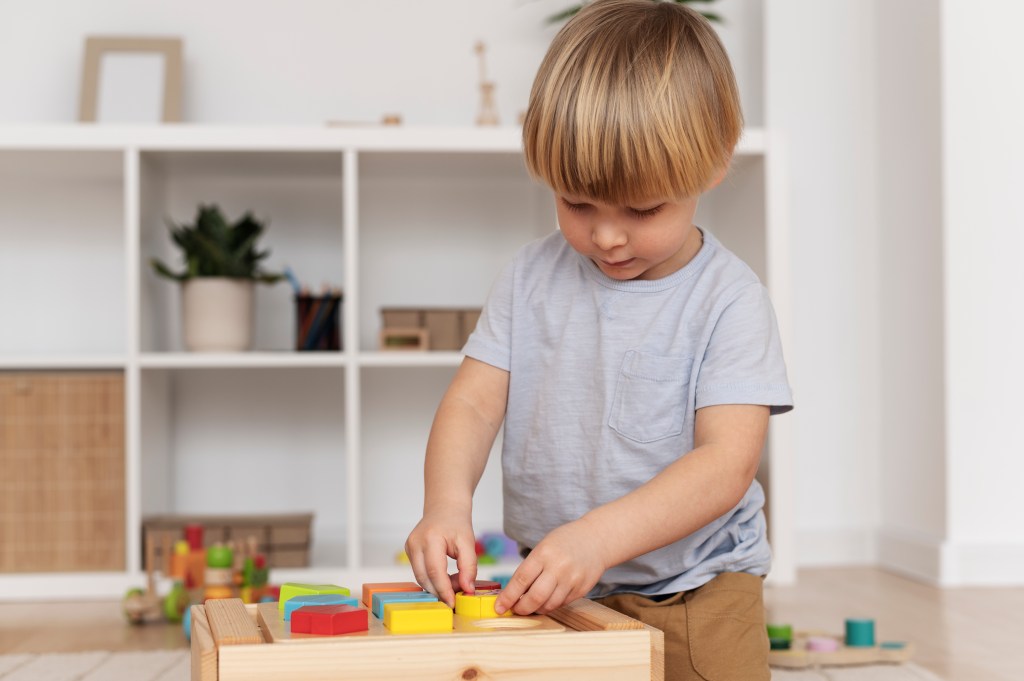
The Montessori method of education has long been celebrated for its emphasis on fostering independence and self-directed learning in children. One of the essential components of a Montessori classroom or home environment is the Montessori toy shelf. This low, child-sized shelf is carefully designed to support a child’s development, encourage orderliness, and promote independence.
Design of the Montessori Toy Shelf
The Montessori toy shelf is typically a low, open-front shelf that is intentionally designed to be at the child’s height. It is made from natural, durable materials such as wood, which aligns with Montessori’s emphasis on connecting children to the natural world. The open design allows children to see and access their toys easily without the need for adult assistance. This child-centric design promotes several key benefits such as independence, accessibility and orderliness.
Placing the shelf at the child’s height empowers them to select and return toys independently. This process encourages self-reliance and decision-making. Additionally, children can access their toys without relying on adults to reach high shelves or open containers. This accessibility fosters a sense of ownership and responsibility of their belongings. The open-front design encourages the little ones to take one acticity at a time and return it to its designated spot promoting order and tidiness – a central Montessori principle.
Toy Selection and Developmental Aids
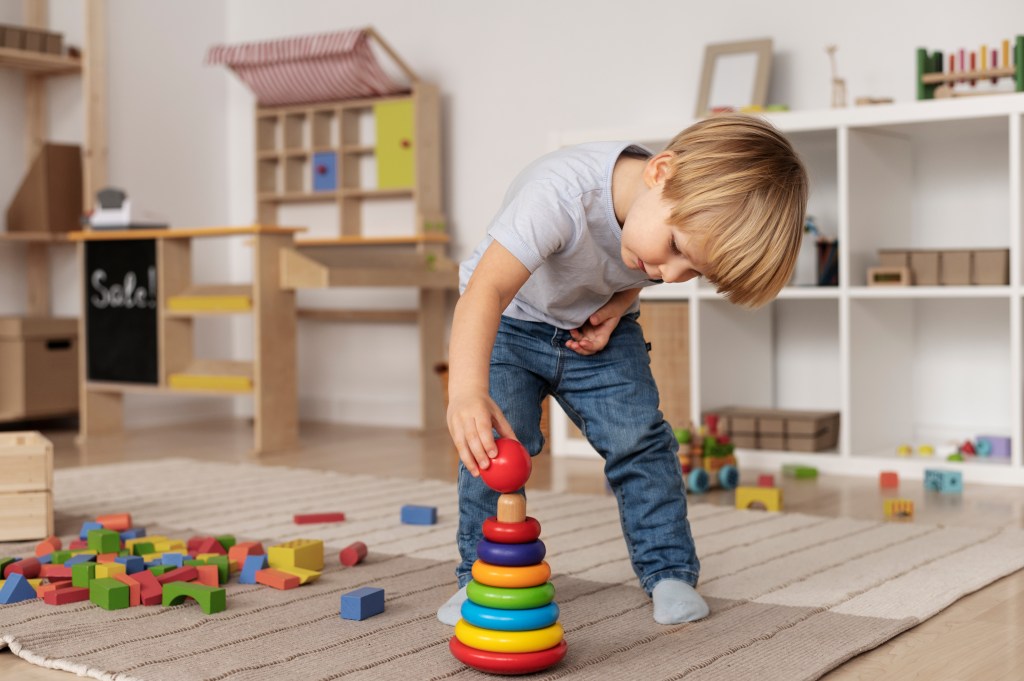
On the Montessori toy shelf, guides carefully curate a selection of toys and developmental aids that align with a child’s current developmental stage and interests. These items may include:
Sensorial materials: Such as wooden puzzles, sorting and stacking toys, and textured objects to stimulate sensory exploration.
Practical life activities: Like pouring, scooping, or buttoning exercises to develop fine motor skills and independence in everyday tasks.
Language and literacy materials: Including books, vocabulary cards, and phonetic games to promote language development.
Mathematical materials: Such as counting beads, number cards, and simple math manipulatives for early math skills.
Art and creativity materials: Like drawing supplies, craft materials, and musical instruments to encourage creativity.
The key here is that the toys and aids are chosen according to the child’s current needs and interests, fostering engagement and skill development.
Tips for Displaying Toys on a Montessori Shelf at Home
It’s important to periodically rotate toys on the shelf to keep the child engaged. Pay attention to your child’s interests and development. Don´t be afraid to introduce new challenges and learning opportunities. You can always adjust the toys and aids on the shelf accordingly. Remember that when introducing a new activity, you should show your child how to use the materials, and then encourage them to explore and experiment independently. While choice is important, limit the number of toys on the shelf to promote focused play and to avoid feeling overwhelmed. Finally, always allow your little one to spend as much time as they need with each activity without rushing or interrupting their concentration.
 Braga Montessori