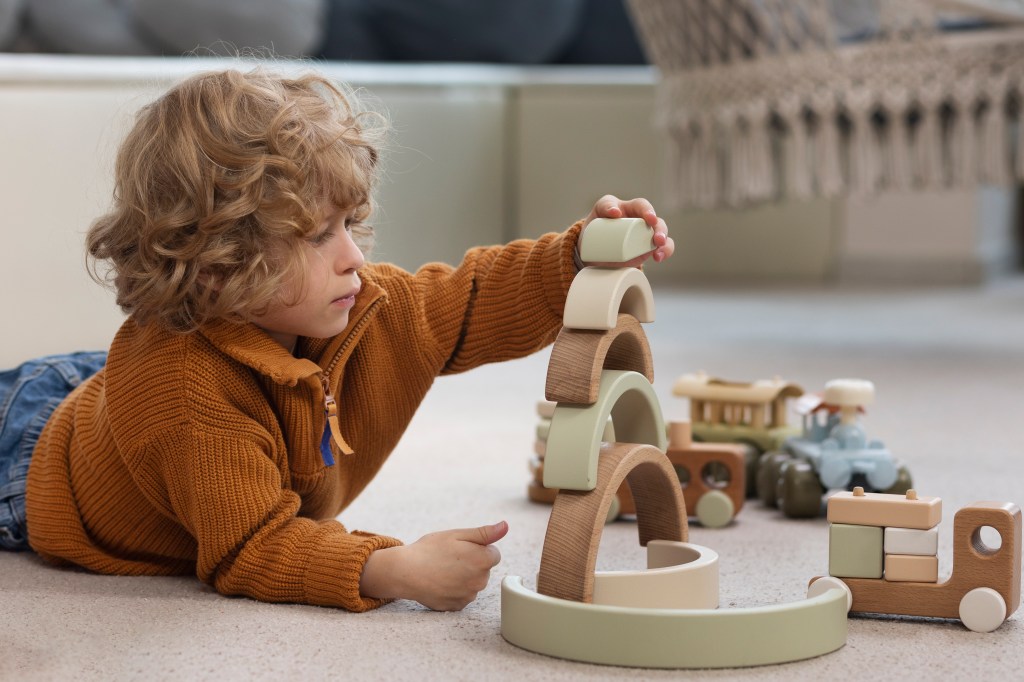
In the fast-paced digital age, where screens and plastic toys often dominate children’s playtime, there’s a timeless charm to wooden toys that continues to captivate young minds. Wooden toys appreciated for their simplicity, durability, and educational value have been a staple in children’s playrooms for generations. One of the most significant proponents of wooden toys was Maria Montessori, the renowned Italian educator and founder of the Montessori method of education.
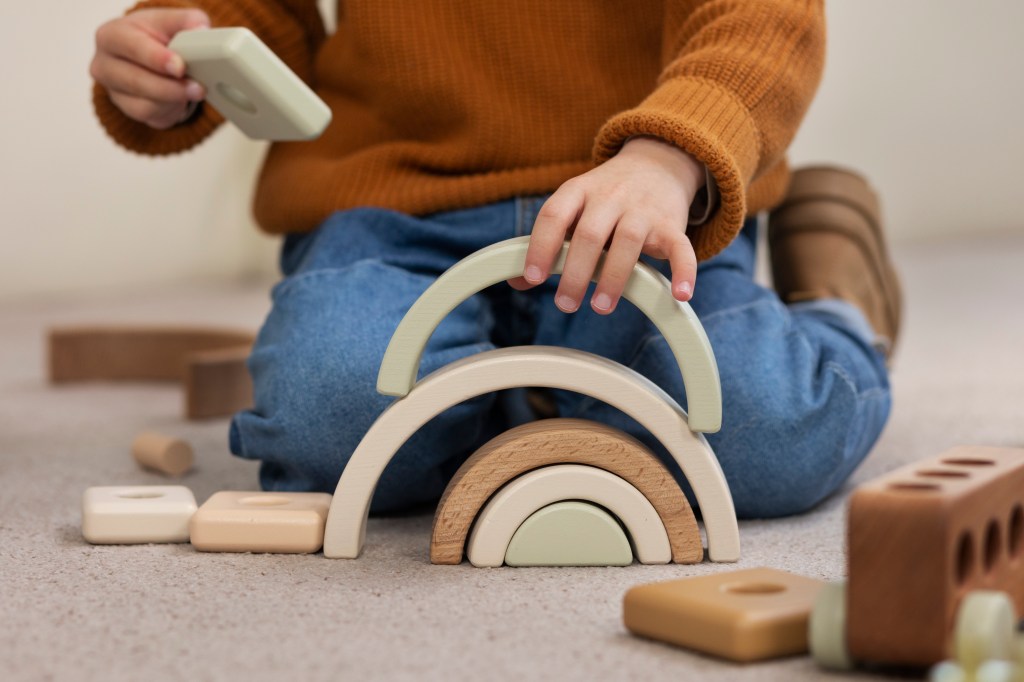
Maria Montessori believed that wooden toys aligned with her philosophy of allowing children to learn at their own pace and in a self-directed manner. Montessori believed that children should be surrounded by natural materials in their learning environment. Wooden toys fit this criterion perfectly, as they are made from sustainably sourced wood and free from harmful chemicals. Montessori toys are intentionally designed to be simple, without excessive decorations or noise. This allows children to focus on the toy’s intrinsic qualities and encourages mindfulness in play. Additionally, many Montessori wooden toys are self-correcting, meaning that if a child makes a mistake while using them, they can easily identify and rectify it. This promotes independence and a sense of accomplishment.
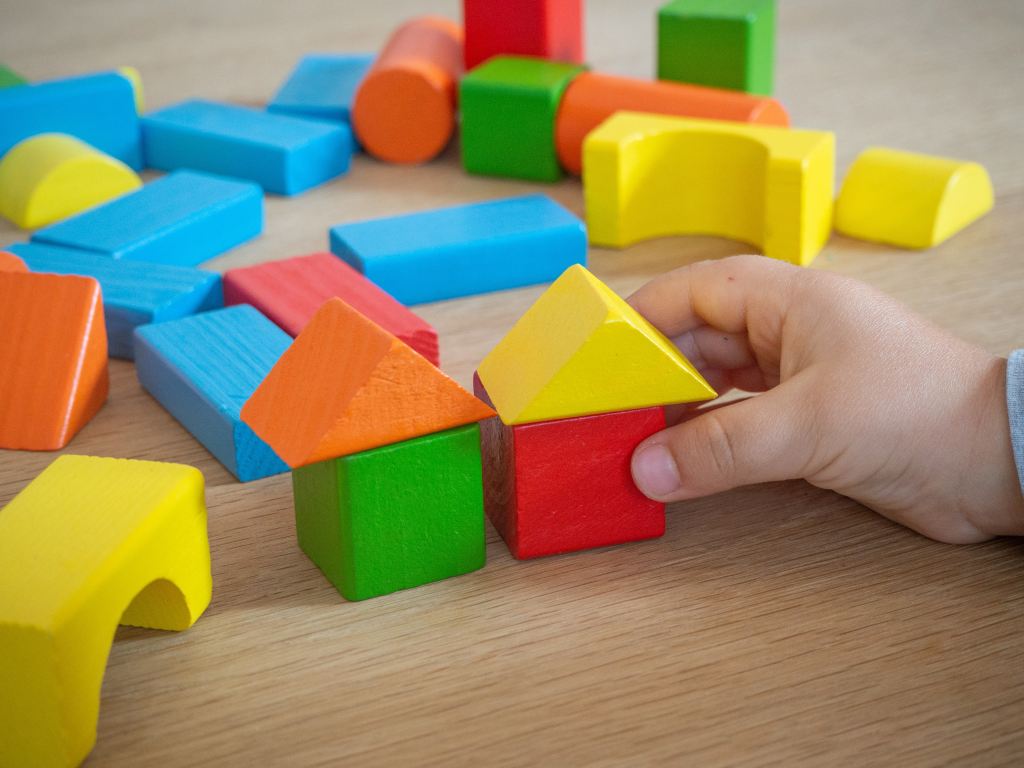
There are also many benefits of using toys made of wood. Wooden toys engage multiple senses, providing a tactile experience that promotes sensory development. The natural texture and weight of wood offer a pleasing sensory contrast to plastic toys. Children can feel the grain, weight, and temperature of the wood, enhancing their sensory perception. Another benefit is durability. Wooden toys are built to last. Unlike their plastic counterparts, wooden toys withstand rough handling and can be passed down through generations. This durability not only saves money but also reduces environmental waste. Addiotionally, wooden toys often lack the bells, whistles, and predetermined functions of electronic toys. This encourages open-ended play, allowing children to use their creativity and imagination to bring the toys to life. Wooden blocks, for example, can become anything from castles to bridges in a child’s mind. Finally, Manipulating wooden toys, such as puzzles, stackable blocks, or shape sorters, hones fine motor skills. The precision required to place a block on top of another or fit a puzzle piece helps develop hand-eye coordination and dexterity.
In a world filled with flashy, disposable toys, the enduring appeal of wooden toys is a testament to their timeless value in child development. Maria Montessori’s endorsement of these toys aligns with her holistic approach to education, emphasizing the importance of simplicity, independence, and the child’s innate desire to explore and learn. By providing wooden toys to children, we can help them grow, develop, and embark on a journey of self-discovery through meaningful, purposeful “work.”
 Braga Montessori