Why Children Prefer to ‘Work’ Instead of ‘Play’ (and Why It’s Not What You Think!)

If you’ve ever come across the famous quote by Maria Montessori that goes, “The greatest sign of success for a teacher… is to be able to say, ‘The children are now working as if I did not exist,‘” you might have wondered why she used the term “work” instead of “play.” After all, childhood is often associated with carefree play and fun, right? 

In the Montessori method, “work” does not connote labor, chores, or boring tasks. Instead, it refers to a child’s earnest efforts to explore, discover, and learn about the world around them. Montessori believed that children have a natural inclination to engage in meaningful, purposeful activities, which she called “work.” This work is not only educational but also deeply satisfying for the child. 
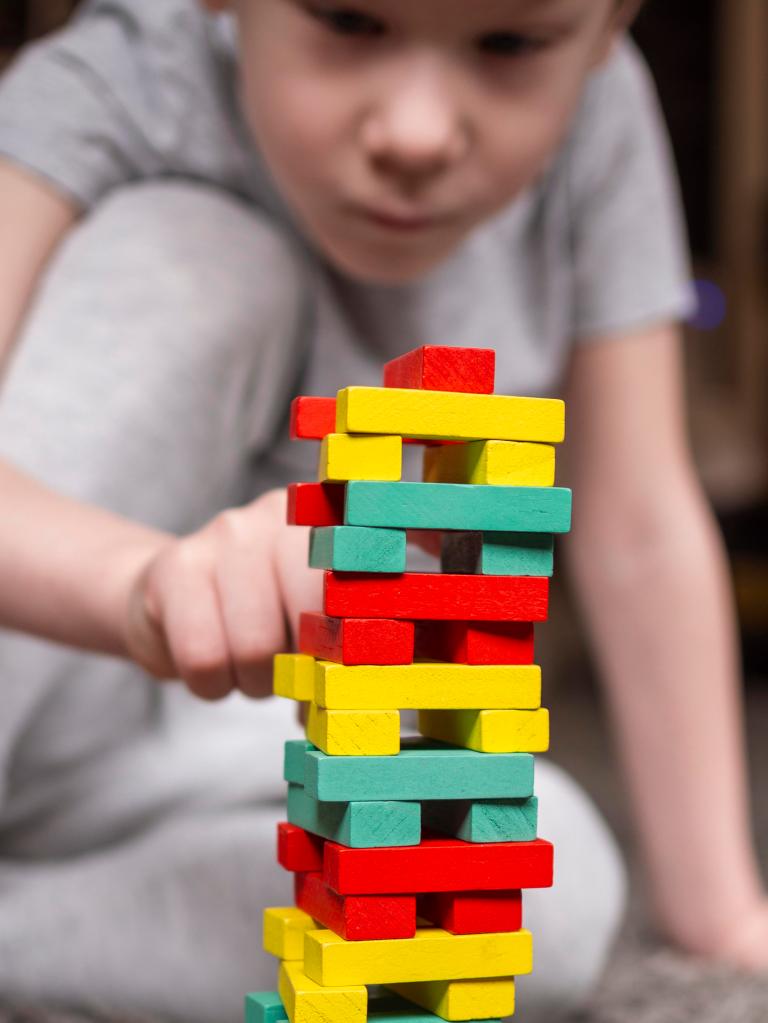
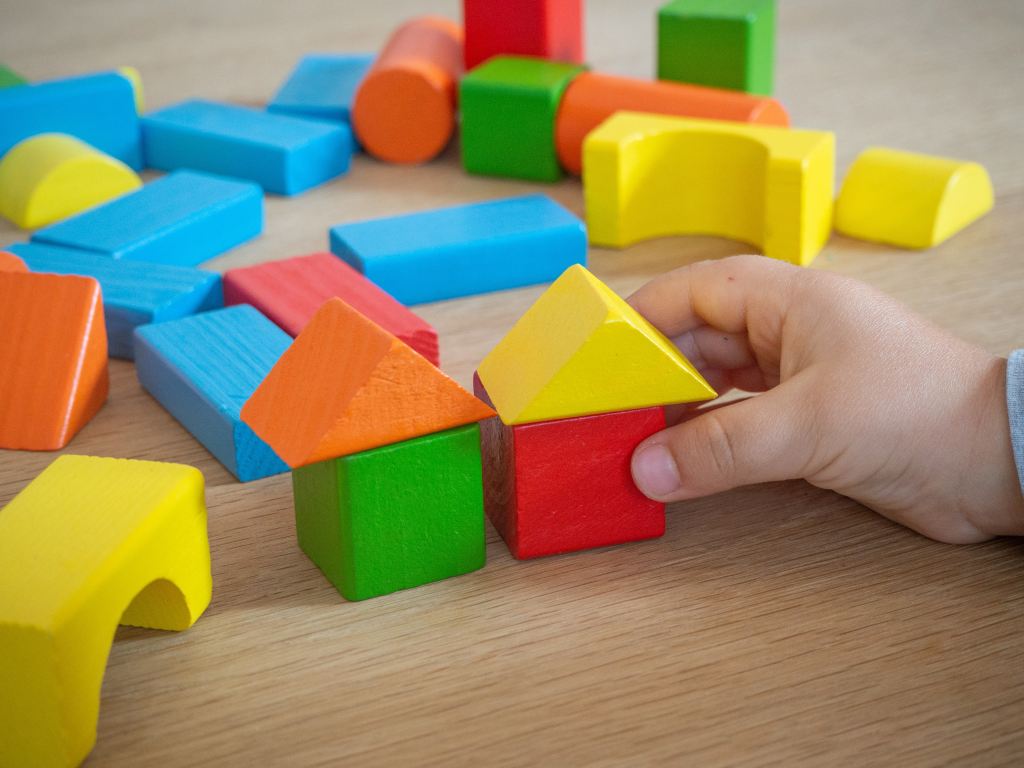
Children are like little sponges, soaking up knowledge from their surroundings. They’re curious and inquisitive, always seeking to make sense of the world they’re growing into. This natural curiosity drives them to actively seek out information and skills. In this context, “work” becomes the vehicle through which they gain knowledge, confidence, and independence. For instance, imagine a child stacking colorful wooden blocks to create a tower. To an observer, it may seem like play, but to the child, it’s a serious task. They’re learning about balance, geometry, and problem-solving. Every time they build a taller tower or change the design, they’re actively experimenting and learning. 

One of the key reasons children prefer “work” to “play” in Montessori’s view is the immense satisfaction they gain from mastering tasks and gaining new skills. For example, when a child waters the classroom plants, they are “working” according to Montessori. This task teaches them responsibility, biology, and the satisfaction of nurturing life. They actively observe the plants’ growth, adapt their watering techniques, and develop a sense of care for the environment. When children engage in these meaningful activities, they experience a deep sense of accomplishment. This sense of achievement, no matter how small, boosts their self-esteem and motivates them to keep exploring and learning. 

In a sense, Montessori believed that “work” was not just about education. It was about nurturing a child’s sense of purpose and autonomy. In this way, children actively shape their own learning experiences, setting the foundation for a lifelong love of learning. So, “work” in this context is not a burden but a joyous and fulfilling process where children eagerly explore, discover, and master the world around them.
The Wonder of Wooden Toys: Maria Montessori’s Wisdom

In the fast-paced digital age, where screens and plastic toys often dominate children’s playtime, there’s a timeless charm to wooden toys that continues to captivate young minds. Wooden toys appreciated for their simplicity, durability, and educational value have been a staple in children’s playrooms for generations. One of the most significant proponents of wooden toys was Maria Montessori, the renowned Italian educator and founder of the Montessori method of education.

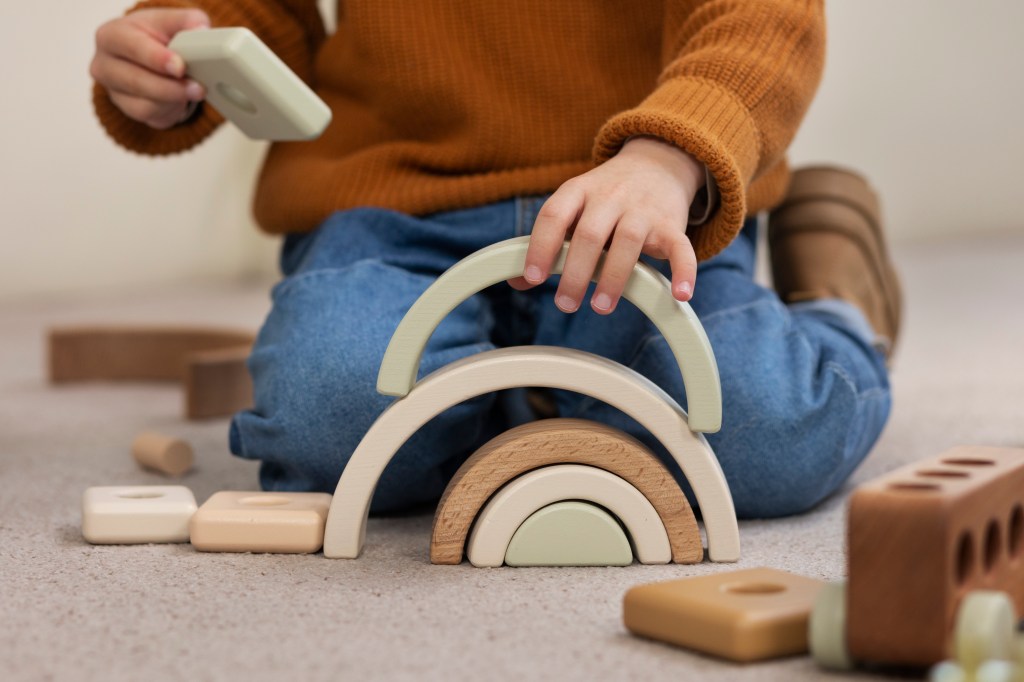
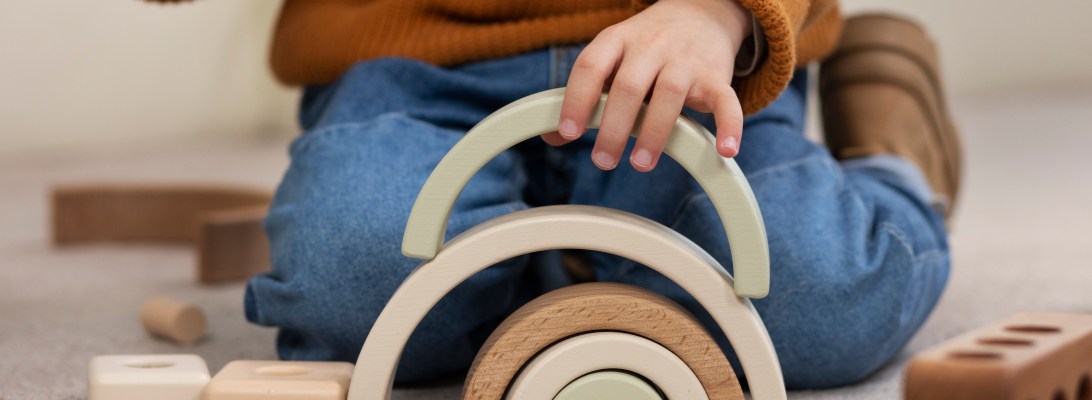
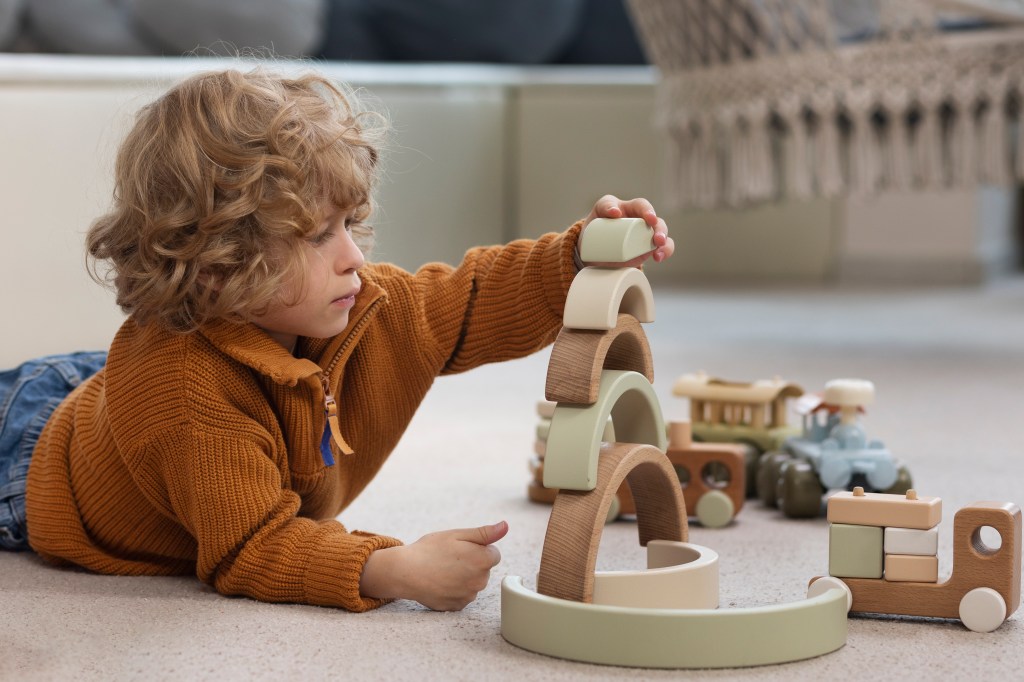
Maria Montessori believed that wooden toys aligned with her philosophy of allowing children to learn at their own pace and in a self-directed manner. Montessori believed that children should be surrounded by natural materials in their learning environment. Wooden toys fit this criterion perfectly, as they are made from sustainably sourced wood and free from harmful chemicals. Montessori toys are intentionally designed to be simple, without excessive decorations or noise. This allows children to focus on the toy’s intrinsic qualities and encourages mindfulness in play. Additionally, many Montessori wooden toys are self-correcting, meaning that if a child makes a mistake while using them, they can easily identify and rectify it. This promotes independence and a sense of accomplishment.

There are also many benefits of using toys made of wood. Wooden toys engage multiple senses, providing a tactile experience that promotes sensory development. The natural texture and weight of wood offer a pleasing sensory contrast to plastic toys. Children can feel the grain, weight, and temperature of the wood, enhancing their sensory perception. Another benefit is durability. Wooden toys are built to last. Unlike their plastic counterparts, wooden toys withstand rough handling and can be passed down through generations. This durability not only saves money but also reduces environmental waste. Addiotionally, wooden toys often lack the bells, whistles, and predetermined functions of electronic toys. This encourages open-ended play, allowing children to use their creativity and imagination to bring the toys to life. Wooden blocks, for example, can become anything from castles to bridges in a child’s mind. Finally, Manipulating wooden toys, such as puzzles, stackable blocks, or shape sorters, hones fine motor skills. The precision required to place a block on top of another or fit a puzzle piece helps develop hand-eye coordination and dexterity.

In a world filled with flashy, disposable toys, the enduring appeal of wooden toys is a testament to their timeless value in child development. Maria Montessori’s endorsement of these toys aligns with her holistic approach to education, emphasizing the importance of simplicity, independence, and the child’s innate desire to explore and learn. By providing wooden toys to children, we can help them grow, develop, and embark on a journey of self-discovery through meaningful, purposeful “work.”

Absorbent Mind: What is it and how do we support it ?

The Absorbent Mind refers to a child’s mind during the ages of 0 to 6 years, and just like a sponge, the little ones are absorbing all the information that they are exposed to during these early years. There are two stages to the absorbent mind. The first stage, from 0 – 3 years old, is when the unconscious learning happens. Children are taking things exactly as they are, without any filter. They are unable to make decisions or choices for themselves. On the other hand, during 3 – 6 years of life or the conscious learning stage, children are able to choose what they want or don’t want to take in. This “special intelligence” is universal and timeless. It’s present in all children regardless of date, culture or place of birth. It’s incredible how effortlessly, tirelessly and instantaneously they take everything in. It’s also a self-constructive and a non-judgmental process. 

[The Absorbent Mind] which receives all, does not judge, does not refuse, does not react. It absorbs everything and incarnates it in the coming man. The child performs this work of incarnation to achieve equality with other men and to adapt himself to live with them.

Maria Montessori
The Absorbent Mind, p. 266

As a guide who has worked with many children, I have found to believe that kids are masters of imitation. They have the eye and the ear for it. They perk up at all kinds of sounds that sometimes even I can’t hear. I was able to capture very recently the works of a child’s absorbent mind taking things in. More specifically, I was watching the 2 year old walking next to her father. I was stunned when I noticed how they have the same swagger. Imitation can strengthen little ones’ individuality by the conscious and unconscious selections of what to copy. It allows them to become aware of their full potential by encouraging them to do things they’d have probably never thought of on their own. 

The role of the adult is crucial as they need to prepare the right environment for their child to continue to develop their fundamental human characteristics. It’s critical for adults to understand the child is taking in everything at once, holistically. In other words, the child is focusing on all of the qualities of what it means to be a human being, and so it’s essential that adults become good role models.  Adults should also actively and constantly prepare the human and physical environment for their child. Removing obstacles and making necessary changes along the way are also part of this preparation. Taking these measures will assure that the little ones will have everything they need to develop their fundamental human characteristics and consequently, employ their little absorbent minds to the fullest extent.